JOIN OUR WHATSAPP CHANNEL





























EXCLUSIVE: Perhaps, Lata Tai & I were connected in previous lifetime, says legendary singer Suman Kalyanpur
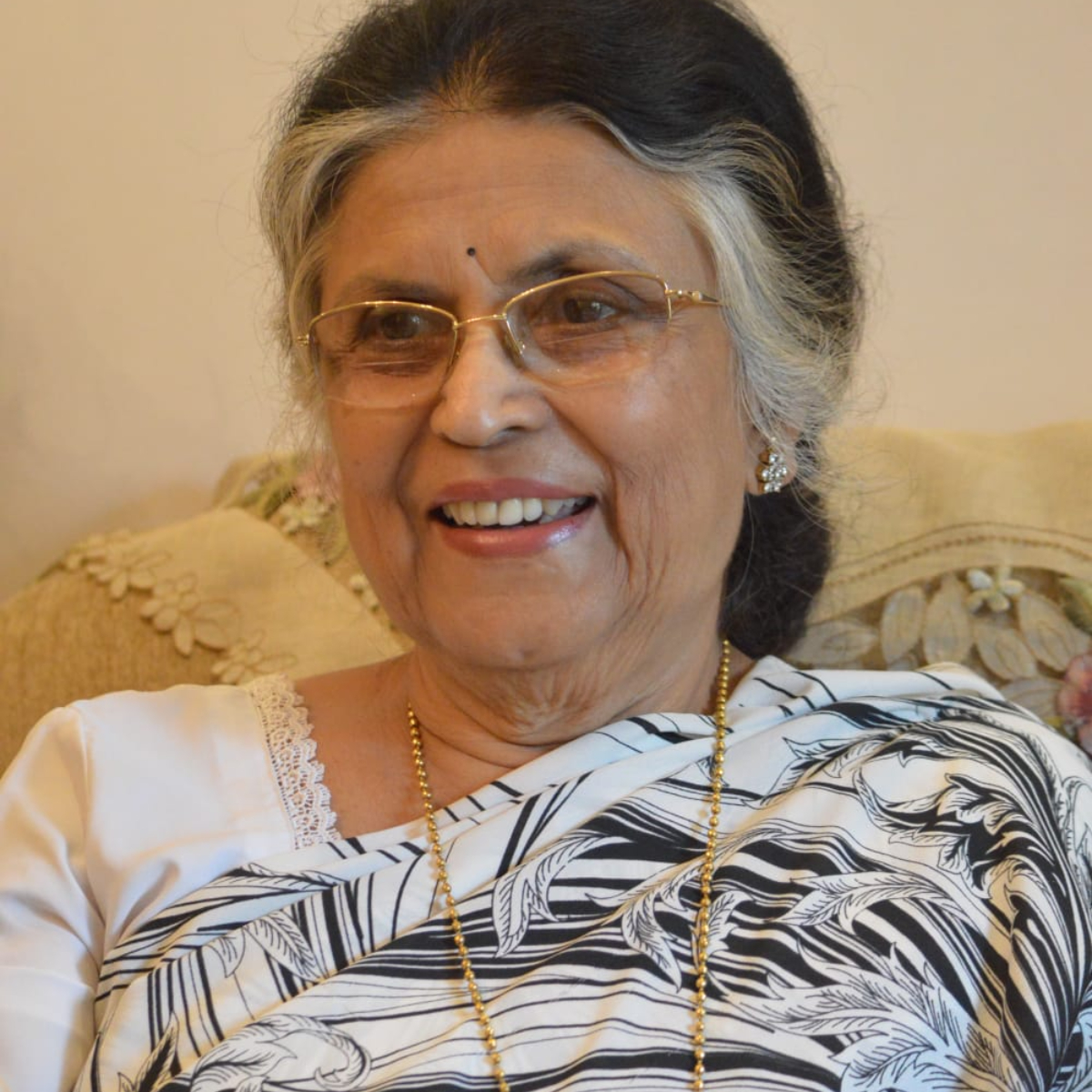
On her 85th birthday, legendary singer Suman Kalyanpur talks about making music and memories.




The zingy Aaj kal tere mere pyaar ke charche (Brahmachari)…
The dreamy Theheriye hosh mein aaloon (Mohabbat Isko Kehte Hain) …
The party-rocker Tumse O haseena (Farz) …
The evocative Na tum hamein jaano (Baat Ek Raat Ki) …
… have not been sung by Lata Mangeshkar!
They have been rendered by singer Suman Kalyanpur. Her dulcet similarity with ‘idol’ Lata was both a commendation and a cost the singer had to unwittingly pay. The inadvertent mix-up often denied Suman her due credit. Uncompetitive by temperament, Suman chose to focus on her art instead.
Being spiritually inclined, she has no place for regrets either. She’s thankful that most of her songs were hits and that her roster includes over 800 film and non-film songs (in Hindi, Marathi, Gujarati, Kannada, Bhojpuri, Bengali, Punjabi and other languages) … an impressive opus indeed.
She’s also thankful for her husband, the late Ramanand Kalyanpur’s support in carving a career post marriage. He was a fan, who gushed over every harkat she lent to her songs. He was her ‘encyclopaedia’, aware of the bibliography of each rendition. He was her partner; in that he took on the domestic chores so that she could concentrate on her riyaz.
(Suman Kalyanpur with her late husband Ramanand Kalyanpur)
In her grey years, Suman Kalyanpur finds the silver lining in her grandchildren with whom she enjoys her kitchen adventures. The legendary singer, who once wove words into melodies, today enjoys knitting sweaters for them, as they play her songs on YouTube for her. She’s content that her music has cut across age and time.
What brought you to playback singing?
I had an ear for music since I was four. By the time I was 13, I’d begun performing in programmes held during the Ganpati festival. In my second year, at J.J. School of Arts, I realised I was allergic to turpentine. It was around that time that I got the opportunity to sing my first film song, Koi pukaare dheere se tujhe (Mangu1954). Obviously, destiny pushed me towards singing.
What do you remember of the first recording?
During the recording of the lori (lullaby), I was asked to stand on a six-inch stool and rehearse on the microphone. I found that rather odd. When I asked the reason for it, I was told that I’d know it soon enough. Just then I saw a tall man enter the room. It was singer Hemantda (Kumar). His wife Bela Mukherjee followed him. He smiled and said, “Ek hi mic pe hamko gaana hai na isliye ye stool.” The fact that I was going to sing with such a senior artiste made me nervous. But he put me at ease saying that he’d heard me rehearsing and that I sang well. Those were encouraging words from a stalwart. It boosted my confidence. I came to know later that Lata Tai (Mangeshkar) was present in the studio and heard my recording.
What followed next?
This was followed by singing for Nashad’s Ek dil do hai talabgar for Shahid Lateef’s Darwaza (1954) and Suresh Talwar’s composition Meri preet mera pyaar for Teerth Yatra (1958). Between 1955-1960, I sang many popular songs including Mohabbat karlo jee bharlo (along with Mohammed Rafi and Geeta Dutt for O.P. Nayyar’s Aar Paar 1954). Of course, later my solo lines were cut. So, I sounded like I was singing in the chorus. The big break came with the duet, Din ho ya raat hum rahein tere saath in Miss Bombay (1957), with Mohammed Rafi saab (the two sang over 140 duets).
What would you regard as your golden period?
I was fortunate to sing for great composers like Shankar-Jaikishan, Roshan, Madan Mohan, S. D. Burman, N Datta, Hemant Kumar, Chitragupta, Naushad, Ghulam Mohammed, Kalyanji Anandji and Laxmikant–Pyarelal between the ’60s -’80s. Songs like Na tum hamein jaano (Baat Ek Raat Ki), Parbaton ke pedon par and Bujha diye hain (both in Shagoon), Baat muddat ke yeh ghadi aayee (Jahan Ara), Ajhun na aaye balma (Sanjh Aur Savera), Sharaabi sharaabi yeh saawan ka Mausam (Noor Jehan) and Mera pyaar bhi tu hai (Saathi)… were extremely popular. So yes, that was my golden period. I continued singing till the mid ’80s.
You’ve mentioned that Lata Mangeshkar was your inspiration. Can you tell us something about your association with her?
Ever since I first heard Lata Tai’s songs on the gramophone and radio as a young girl, I have remained enchanted by her. Her voice is so madhur (sweet). Uss awaaz ko mere shat shat pranaam. Singing my first and only duet with her, Kabhi aaj kabhi kal in Chand (1959), remains a special memory. I didn’t know that I was going to sing with her until I went to the studio. Surprisingly, I wasn’t nervous. In fact, I sang quite confidently. I’ve always felt a strong connect with her. Perhaps, Lata Tai and I were connected in a previous lifetime. I pray for her quick recovery.
Your voice was often mistaken for that of Lata. How did you take that?
You know, I never gave it a thought. I was only concerned with giving my best to every song. Everyone has their opinion. The connoisseurs of music would always recognize my voice. People love my voice. I sang every song as if it were a blessing.
(Daughter Charul Agny with Suman Kalyanpur)
How easy or difficult was it to continue singing after marriage?
After my marriage in 1958 (to Mumbai-based businessman Ramanand Kalyanpur), I kept getting offers. I didn’t take those up because I was married into a joint family and felt odd to go for recordings. The ladies in the family were devoted homemakers. My husband and his brothers ran the family business. However, music composers kept approaching me to sing. Finally, my husband convinced me to go ahead. My condition was that he should accompany me to all the recordings.
Being a shy and protected girl, my father would be present during my recordings earlier. My husband agreed and from then on, I always enjoyed his support. He managed everything for me. He would even help with the cooking if I had to attend a morning recording. All this he balanced with his own work. He’d be with me during the recordings and then head to office.
Mahurat shots were said to be canned with your songs, you being considered a lucky charm. True?
Yes, quite a few filmmakers did the mahurat shot with my song. Sawan Kumar was one of them and so was music director Dattaram Wadkar. Allah tu reham karna from Jugal Kishore’s Dada (1979) and Zindagi imtihan leti hai for Manmohan Desai’s Naseeb (1981) featured in the mahurat shots.
You pioneered the trend of hosting shows abroad (between 1969-76). Can you share a special memory?
I did a total of 30 shows in the West Indies (including Trinidad, Surinam and Guyana), UK and the US in 1969. On one occasion, The India Club of Columbia University and The Indian Students Association of Philadelphia had organised shows on 19 and 20 July 1969 in New York. Our shows were coinciding with the moon landing and the moonwalk. It was an exciting time. I too wanted to watch it live on TV but I was committed to the show.
As luck would have it the technician, who fixed the mics, didn’t turn up. The organisers announced that perhaps we would have to postpone the show. But the audiences would have nothing of that. They said they could watch the moon landing the next day as it would be repeated on TV. But they wouldn’t get to witness this ‘live’ singing again. An engineer from India amongst the audience offered to fix the microphones. I was surprised to see the number of Indian students at the concert. When I sang Juhi ki kali meri laadli (Dil Ek Mandir 1963), they asked for an encore. It was overwhelming. It was my first show in the US and the memory remains unforgettable. A show which was scheduled to end at 9.30 pm went on till 11pm that night – extremely late by the then standard.
Any favourites from your collection?
I sang in all genres as long as the lyrics were not vulgar. I chose to sing the songs, which appealed to me. Hence, I don’t have any favourites. But I enjoy hearing like Chaal baliya jaadu kar gaya (Roop Lekha 1962), Man gaye ye taraana (Chalaak 1973), Baad muddat ki ye ghadi aayi and Parbaton ke pedon par.
In retrospect, do you have any regrets?
Jo bhi gaane mujhe mile unmein se main select kar ke gaati gayi. I enjoyed singing them. I have made a name for myself. I have fans all over the world, who love my voice. I’ve been blessed. I am content.
Tell us something about your life now.
I am a spiritual and religious person. I strongly believe in karma. Devi Devtaon ke aashirwad se hi mujhe yeh sab kucch mila hai. After my husband passed away, my daughter Charul (Agny) accompanied me to my shows. She lives next door. I share a close bond with my granddaughter Aaishanni (Agny) and Aavniesh (Agny). We are foodies. Aashianni and I cooked and baked a lot together during the lockdown. My grandson chipped in too. He made chocolate cookies, which I supervised. In fact, he can prepare some great non-vegetarian continental dishes as well.
(Suman Kalyanpur with granddaughter Aaishanni and grandson Aavniesh)
Apart from cooking what else interests you?
I enjoy doing crotchet, knitting and macrame while listening to my songs. I love designing furniture and decorating my home. Gardening is another hobby. I’ve knitted a stole, a cap, a blanket and shawls for my granddaughter, who’s studying in the US. Now, I’m working on a sweater for my grandson. Sometimes, my daughter and my grand-daughter play my old songs in Hindi and regional languages on YouTube. I had forgotten many of them. Now with social media, they have become audible to the world. Isn’t that nice?
ALSO READ: Lata Mangeshkar continues to be in ICU after being given a trial of extubation