


 JOIN OUR WHATSAPP CHANNEL






































EXCLUSIVE: I didn’t mind Kalpana living in with Bhupenda, what upset me was the age gap, says Lalitha Lajmi
An exclusive heart-to-heart with artist Lalitha Lajmi on the third death anniversary of her beloved daughter and filmmaker Kalpana Lajmi.




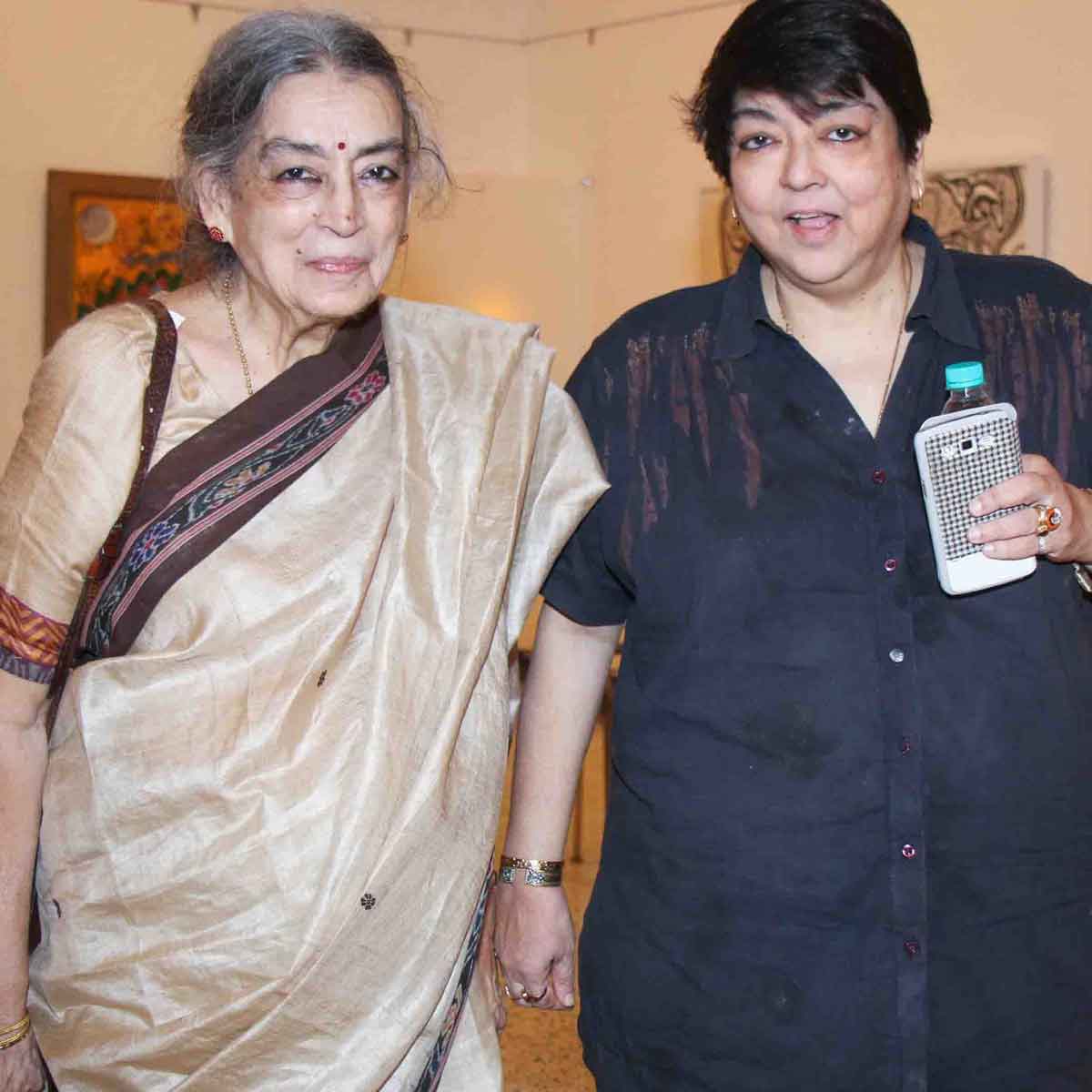
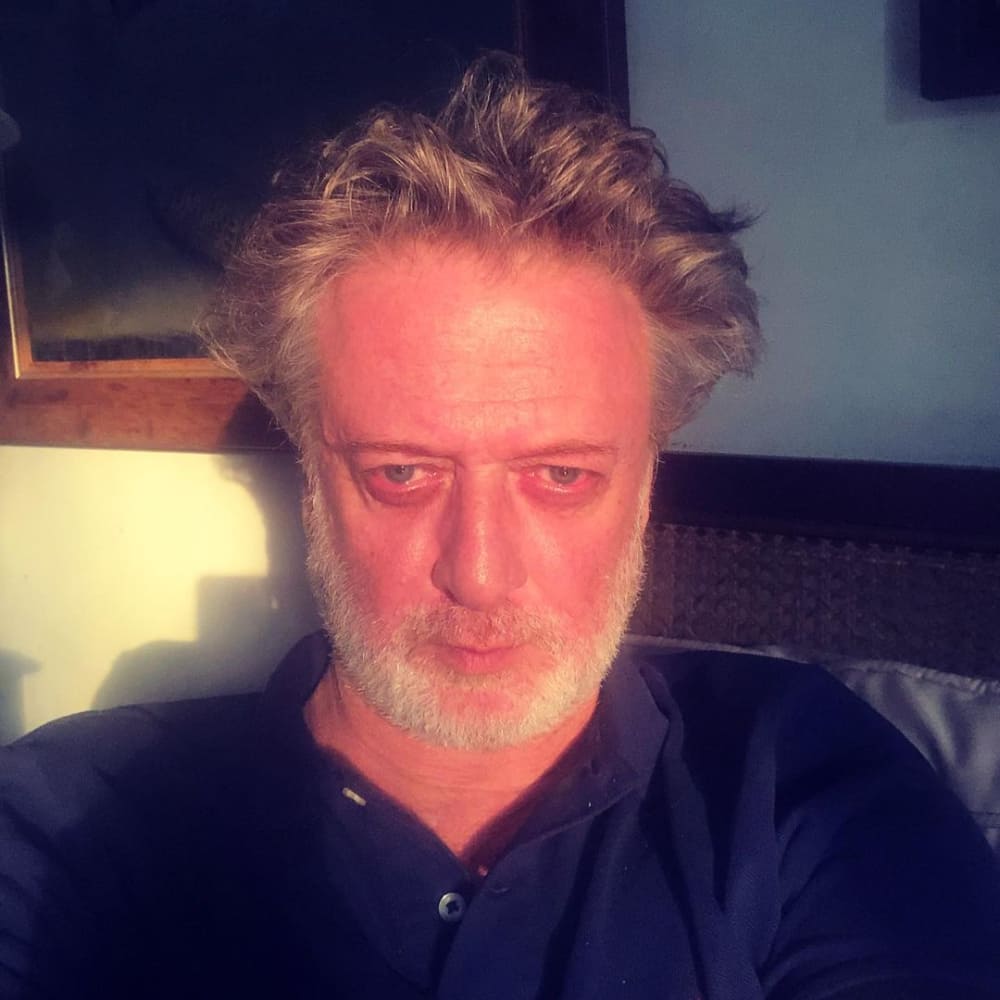
Her face is no less a canvas, the deep lines both revealing and hiding the story of the octogenarian’s tumultuous life. Well-known artist Lalitha Lajmi’s paintings may have liberal strokes of colour. But her life has predominant shades of grey. The untimely demise of legendary brother/filmmaker Guru Dutt (1964), followed by his wife, songstress Geeta Dutt’s excruciating death due to liver cirrhosis and later the death by suicide of their older son Tarun Dutt and younger son Arun Dutt due to multi-organ failure… is a trajectory that reeks of tragedy. Her other two filmmaker brothers Atma Ram and Vijay also died due to cancer later.
Lalitha’s marriage too was not an idyllic one. The addiction of her husband, Captain Gopal Krishan Lajmi, to alcohol tore every shred of sanity at home. But their gifted daughter, Kalpana Lajmi, was their solace. Granting her the freedom to discover herself, they were devastated when she walked out on them to live-in with maestro Bhupen Hazarika, old enough to be her father.
A feminist at core, Kalpana however was a woman possessed when it came to love. She gave her best years to Bhupenda, even swallowing the affront of being labelled as his ‘manager’. Nursing him unflinchingly during his failing health, Kalpana unfortunately found herself jobless and ill during the years following his demise. And while she moved in and out of hospital, all that kept Kalpana alive was the dream of launching her memoir, Bhupen Hazarika: As I Knew Him, on her mentor and a revered artiste. In fact, a week before her death on 23 September 2018, Kalpana Lajmi was supposed to travel to the venue of the launch in an ambulance. But her fragile condition prevented such an audacious jaunt.
For 89-year-old Lalitha, who nursed Kalpana through the darkest lows, life has been on pause since her daughter passed away. Because nothing compares to the grief of losing your child, in whom you invest so many dreams and emotions. “Her films were ahead of time, path-breaking, if she was alive…,” she laments. “I miss her terribly. I don't know how to express, I have been crying for years,” she sighs.
In Lalitha Lajmi's own words...
Bitter-sweet childhood
Mine was an arranged marriage. My husband, Captain Gopi Lajmi, was in the shipping industry. We lived in the British quarters in Colaba, which overlooked the beautiful sea. Later, my husband took a shore job. Kalpana (Lajmi) was our only child (born in 1954) for eight and a half years, until our son Devdas was born. Kalpana was extremely fond of her father. He showered her with attention and pampered her. He’d take her to the aquarium, to the zoo, buy her books... Kalpana was also attached to her grandmother (Vasanthi Padukone, Lalitha’s mother). She was a teacher and regaled Kalpana with tales of the Panchatantra, the Mahabharata and the Ramayana.
But by the time Devdas was born, my husband was a different man. He’d got hooked on alcohol. Since, I didn’t allow him to drink at home, a mistake in retrospect, he’d be out with friends all the time. He rarely came home sober or shared a meal with the children. There were regular fights at home. Kalpana studied in the Convent of Jesus & Mary at Fort. She was excellent in elocution. She also had a flair for acting and won all the prizes in Hindi and English dramatics. I devoted a lot of time to her and would keenly watch her rehearsals. She scored brilliantly in her ICSC exams after which she enrolled in St Xavier’s College. There too, she got deeply involved in theatre. Satyadev Dubey’s Hayvadana, written by Girish Karnad, was her first play. Kalpana also did workshops with Alyque and Pearl Padamsee.
A May-December romance
I was ambitious for her and wanted her to pursue acting/filmmaking even though we couldn’t afford the fees. I introduced Kalpana to Enact, a drama journal. I tried to enrol her at the FTII, then at the NSD, by meeting Ebrahim Alkazi, and later at MIT, Boston. However, Kalpana refused to join any institute. Her reasoning was that after giving five years to training, she couldn’t survive just on theatre. Eventually, she’d have to look for a job in advertising, which she hated.
She preferred learning filmmaking hands-on. She began assisting my cousin/filmmaker Shyam Benegal. One evening, at Atmaji’s (Lalitha’s elder filmmaker brother Atma Ram) residence, Assamese maestro Bhupen Hazarika’s record was played. I was so impressed by his voice and music that I told Atmaji that it would be wonderful if he composed for his upcoming film Aarop (1973). Atmaji remarked that ‘Bhupen Hazarika’ was a big name and an extremely busy man. Nevertheless, Atmaji wrote him a letter. Soon, Bhupenda came to Mumbai and was invited for dinner at Atmaji’s home. Kalpana met him there for the first time. That evening onwards her journey changed forever. She was 17 to his 45. At first, I didn’t know of her involvement with Bhupenda. She’d say she was going to the suburbs to meet her friends. As parents we’d given her all freedom. When I finally got to know of her relationship, Kalpana insisted they were just good friends. But she was constantly on the phone those days. Her father would complain about the huge bills. She would keep making calls to Kolkata and also send telegrams.
Living in with Bhupenda
One day, Kalpana said she was going to Kolkata to make a documentary on eminent Bengali filmmaker Dhiren Nath Ganguly (D.G. Movie Pioneer 1978). She said she wanted to learn from Bhupenda, who would also be giving the music. She took along her cousin Arun (the late son of Guru Dutt). Eventually, Arun returned while Kalpana stayed back saying she was wrapping up things. After Kalpana had left, I happened to open her cupboard one day and found that it was empty. I understood she’d left for good. It came as a huge shock. Her father too missed her. But he was a reticent person and didn’t say anything. I was teaching Art in Fort Convent that time. As soon as the vacation began, I left with Devdas for Kolkata, to bring Kalpana back. I didn’t mind her living with him. What upset me was the age difference. She was only 19. Bhupenda was fit to be her father.
In Kolkata, Bhupenda and Kalpana were living in a small two-room flat. It was shabby. There was no cooking gas. There was one stove, on which all meals were prepared. I wondered how difficult it must have been for Kalpana to adjust there. She was used to so much comfort. There, I also witnessed Bhupenda’s true nature. No doubt, he was a brilliant artist but he was moody and hot-tempered. He would be angry all the time. He’d have drinking sessions. Each time he had to perform; he carried a pint in his pocket. We stayed there for a month. Then I had to leave. I told Bhupenda I wanted to take Kalpana home. He didn’t say anything. Kalpana didn’t accompany me to the station. Bhupenda came to see me off. I was in tears. In a few words he said, “Lali, she will be with me from now on.” It was extremely difficult for me to accept the situation.
An unequal partnership
Why did she enter such an unequal relationship? I guess it was a ‘father complex’. She’s mentioned in her memoir that she found her Papa’s drinking ‘unbearable’. My husband’s drinking was a problem, no denying that. But that was not the reason. Kalpana went because she wanted to be with Bhupenda. She just fell in love with him. Being an independent mind, she knew exactly what she wanted professionally or personally. But ironically, she’d only jumped from one pyre into another. Because Bhupenda too would only be drinking. They didn’t get married. She was living-in as his partner. In the beginning, Bhupenda didn’t accept their relationship publicly because he was conscious of his image. Being unconventional, Kalpana too didn’t believe in marriage. But she remained totally devoted to him even though they had their tiffs. He would often be invited to perform abroad. There he’d introduce her as ‘niece of Guru Dutt’, ‘daughter of so and so’ or his ‘manager’. Kalpana resented that. While she was open about their relationship, he didn’t acknowledge her.
During his later trips to America, he’d stay in someone’s home, not in a hotel. The household women would make his favourite dishes for him and pamper him. Kalpana would plan the whole trip, she’d plan the order of songs, she’d have the songs written in big letters so that he could read easily… but she would be ignored. Being young, she wanted to go sightseeing during the weekends. But he was comfortable staying at home. Something I greatly detested was when she’d tie his shoe laces for him. I never saw my brother Guru Dutt indulging in that even at the height of his stardom. I chided her, “Why are you doing it?” She replied, “Mummy he can’t do it.”
Mellow years
With time, Kalpana made her first feature film Ek Pal (1986). Rudaali (1993) about a professional mourner, Darmiyaan: In Between (1997) about an actress, who discovers her son is a eunuch and Daman: A Victim of Marital Violence (2001) followed. Her ability to give voice to a woman’s emotions won her critical acclaim. The music of all these films was done by Bhupenda. In the early 2000s, when things began to slow down in Kolkata, Kalpana and Bhupenda came back to Bombay. They lived with us for around five-six years. This time Bhupenda was a different man. Gone were the temper tantrums. He’d quit smoking and would drink only socially. He’d help me around and even cut the vegetables. He’d do such an artistic job of it. He’d prepare lovely salads. He was a good cook and prepared prawn and egg curries in Assamese style. We got along extremely well. Bhupenda and Kalpana did go through their share of friction. She would share it all with me. It brought us closer. One day she had a tiff with me too. The next day, she took all her belongings and went to live at their office flat. She had a terrible temper.
Once Kalpana and Bhupenda attended an award function in Delhi. There he developed a breathing problem. On return, he immediately underwent a heart surgery, due to which he lost a lot of blood. After that, he felt exhausted all the time. Kalpana was constantly by his side when he was hospitalized for four-five months. She’d leave in the morning and return at night. Later, when she stepped out for work, I’d be with Bhupenda. He’d listen to music, while I’d paint in the afternoon. His favourite dishes and snacks were made for him. In that sense, I too looked after him. After Bhupenda passed away in 2011 (he was 85), Kalpana found it difficult to get work. Her best years were spent paying attention to his needs. She also missed her father, who’d passed away some time before Bhupenda due to TB of the lungs. Gradually, she too began to face health problems.
The downslide
Actually, Kalpana had diabetes when she was in Kolkata. But it was discovered, when she was detected with kidney cancer in 2017. One of her kidneys was surgically removed. My son Devdas paid for the expensive operation. Later, Kalpana developed a chronic UTI (urinary tract infection). The other kidney was removed as well. She had to undergo regular dialysis. Aamir Khan was the first person to offer help. He sent cheques directly into her account. Some other directors also contributed. Soni Razdan and Alia Bhatt paid for her dialysis till the very end. They were extremely close to Kalpana. In fact, Alia was born in front of her. I am deeply grateful to all those who helped. There were other expenses too. Thankfully, her medical insurance was of great help.
Sadly, through this all, her liver problem went undetected. Kalpana had lost appetite. Being once a foodie, she didn’t like the mention of food. When the doctors did the liver scan, she was detected with fourth stage cirrhosis – though she never had alcohol! But yes, she was fond of colas, which supposedly burn your insides and can form holes in the liver. Though she was seriously ill, she was keen to launch her book on Bhupenda. A week before she passed away, she asked, “Mummy… am I going to die?” I replied, “Kalpana, you will not go first. I will go first and then you will follow me.” Little did I know that her days were numbered. She passed away on 23 September 2018.
Devdas, who lives abroad (he’s Deputy Director of the marine company – North P&I Association in Greece), was here for the funeral. He left after the 13th day. It was disheartening to be left alone though my cousins were there. Devdas keeps in touch but not as much as I expect. He calls me once a week. Sometimes, he’s unable to do so. But it’s okay. Now, I have got used to it. Devdas is a gentle boy. Sadly, he only has unhappy memories of his childhood and grudges the lack of attention from his father and to some extent from me, as I was also focusing more on Kalpana. He’s been on a ship since the age of 19. He was a captain and later taught navigation. Being away from home for so long, also tends to lessen the attachment.
The loss of my brother Guru Dutt (1964), my bhabhi Geeta (Dutt 1972) and later their sons Tarun (he died by suicide in 1985) and Arun (2014) and now Kalpana… the tragedies have left me emotionally drained. I still cry for Kalpana. Her memories are so alive. She was so talented, a dynamic personality, far ahead of her times…
ALSO READ: Filmmaker Kalpana Lajmi passes away; Soni Razdan, Hansal Mehta and others offer their condolences





.JPG "Kalpana Lajmi at Tao Art Gallery group show")