JOIN OUR WHATSAPP CHANNEL













































Fan Blog: The Second Coming Of Konkona Sen Sharma : A Sign Of Great Things To Come





'I now have a slot!', declared Meryl Streep in a recent talk show interview. She meant that at the age of 67, she now had a certain friday set every year when her big summer movie would release. As I sat in my bed, watching it, what I found most remarkable about the declaration was not the fact that Streep is a woman in her sixties, or even the fact that she is a woman, but the fact that Streep in essence is a credible, believable character actor, and not a towering moviestar with a persona larger than life. True, she is an intelligent craftswoman with the power to transform into the people she portrays, but she certainly isn't a Tom Cruise or a Jackie Chan or a Salman Khan who essentially play themselves on screen; whose personas are so big that they can, with a few tweaks here and there, pull off an endless succession of blockbusters, year after year. This star, thought I, that can now headline solid Hollywood mainstream movies is the same woman who, by her own admission, was once declared 'too ugly' to be cast as the lead actress in King Kong, by its producer Dan De Laurentiis.
Around the time of Wake up Sid's release, I remember having a conversation with a friend of a friend about it, and him saying how he wished its heroine were someone like Katrina Kaif or Deepika Padukone. 'Konkona Sen?', I remember him declaring, 'She is not heroine material!'. I remember, then, seeing the film, and seeing Sen Sharma, appearance fully Manish Malhotrified, play Aisha Banerjee as effortlessly as she has any other character before or since, with implicit honesty and easy precision. I remember loving the film, and feeling vindicated by the fact that Sen Sharma could play with great success the heroine opposite the most promising young star of the country in a movie produced by none other than Karan Johar. How much more mainstream could it possibly get, thought I.
But I wonder now, if somewhere in her, Sen Sharma, as she played that leading lady, was aware of the make-over she had been given. Was she conscious, I wonder now, of the eyelashes, of the designer kurtas, of the lustrous locks, of the spotless style: aspects that are otherwise everyday staples of our hindi film heroine? I had hoped, fervently, that Wake up would be her break into the big league and that soon I would see her play similarly authentic, equally refreshing lead roles opposite other big male stars of the country, and I was disappointed when I realised that it wasn't turning out quite that way.
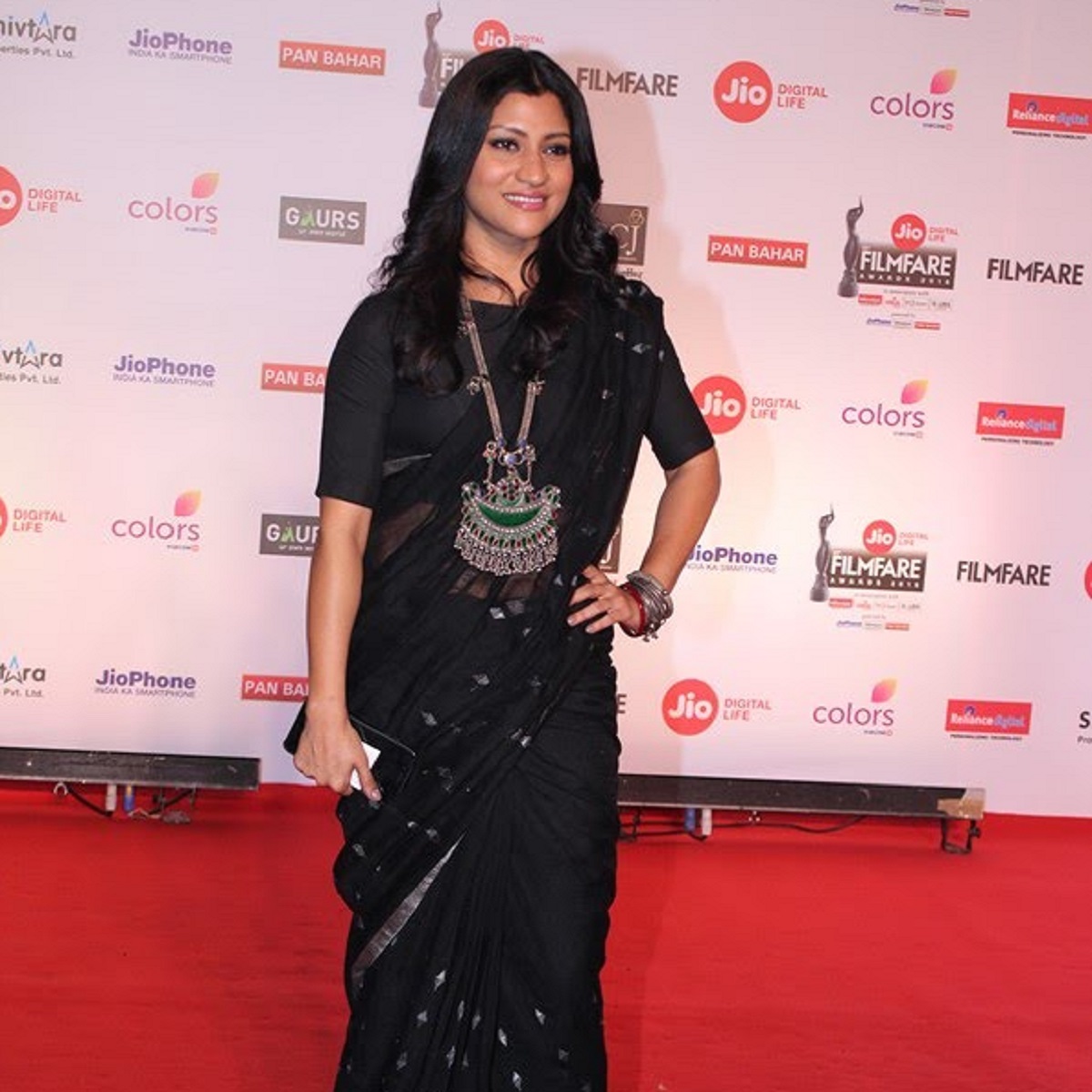
As I sit here, now, looking at a picture of Sen Sharma looking an absolute vision in Payal Khandwala at the premiere of A Death in the Gunj, her debut directorial outing, I wonder why I, and the majority of my fellow Indian movie goers, take such an approach when it comes to measuring our female actor's success. We think her career to be thriving when we see her opposite the Khans, the Kapoors and the Kumars, and failing when we dont. We consider it the norm that she looks unlike most women we see on our streets, in our families, at our workplaces. We regard it only natural that she belongs to a singular category of physical appearance: light-skinned, thin-framed and carrying the air of a runway model. We have come to expect her to almost always play an unattainable, other-worldly object of desire. And I now think that it is little wonder, then, that a woman of Sen Sharma's powers hasn't desired to be our Deepika Padukone or Katrina Kaif.
And I wonder if we could call ourselves emancipated as long as our female actor's success is measured by the market value of her male co-star, when what should in fact be the measure of our leading man's success is their being able to play opposite complex leading women, opposite our Sen Sharmas, Vidya Balans, Tabus, Kalki Koechlins, Richa Chaddas, Radhika Aptes and Nandita Dases. What should in fact be her success is her possessing the freedom to jump from an art-house drama, to a romantic comedy, to an action-adventure, seamlessly, as and when she chooses to. What would, in truth, be her triumph is her being given the opportunity by writers of burning passion, by film-makers of true yearning, to take up a series of movies, time after time, and play real women, with real lives.
As I look forward to A Death in the Gunj, and many, many more outings from the luminous Ms. Sen Sharma, both as an acting genius and as a director in the making, I hope we can be and become the kind of audience that would let her thrive; that would give her a chance to evolve into our very own Meryl Streep or Liv Ullmann or Isabelle Huppert, for if are ever to gain global glory, it certainly wouldn't be through making tired imitations of Western gloss and projecting on screen a lifestyle we simply do not have. It would be through voices like Sen Sharma's, and our willingness to see them, to hear them, and to encourage them to put on whatever mask they desire to put on, and to say their pieces, loudly, proudly, openly, truthfully.