JOIN OUR WHATSAPP CHANNEL














Paithani Sarees: Five types of Paithani sarees that you MUST buy
Paithani saree is one of the most beautiful sarees in India. No Marathi wedding is ever complete without this saree. In fact, this 2000-year-old saree has been adorned by Mughals, Marathas and the Nizams!




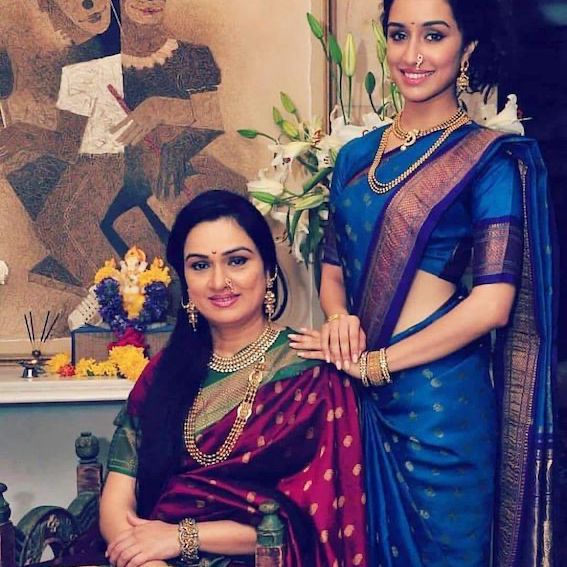
The paithani saree is famous for its uniqueness. The Paithani style of saree is hand woven silk a rich, ornamental zari pallu and border. What really sets apart Paithani sarees is its unique weaving technique. The entire process - from dyeing of the yarn to weaving - is done by hand. The main body of the saree is weaved by hand in looms. Whereas the weaving process of the pallu and border is similar to the tapestry weaving technique.
The saree that is weaved is extremely soft and delicate. The designs and motifs that adorn the saree are also unusual. The motifs are created by interlocking and tying the colored threads to the warp of the loom. In fact, the reverse side of the saree looks as gorgeous as the front side. The unique weaving of the saree makes it look like as if the designs have been inlaid into the fabric of the saree! Paithani sarees are differentiated on the basis of the colours, weaving techniques and motif.
Here are the five types of Paithani sarees that deserve a place in your wardrobe:
1. Bangadi mor Paithani saree
In Marathi, “bangadi” means bangle and “mor” means peacock. So “bangadi mor” means a peacock in a bangle or a peacock woven in the shape of a bangle. The motif is usually woven onto the pallu. This is one of the most commonly found designs of the Paithani saree!
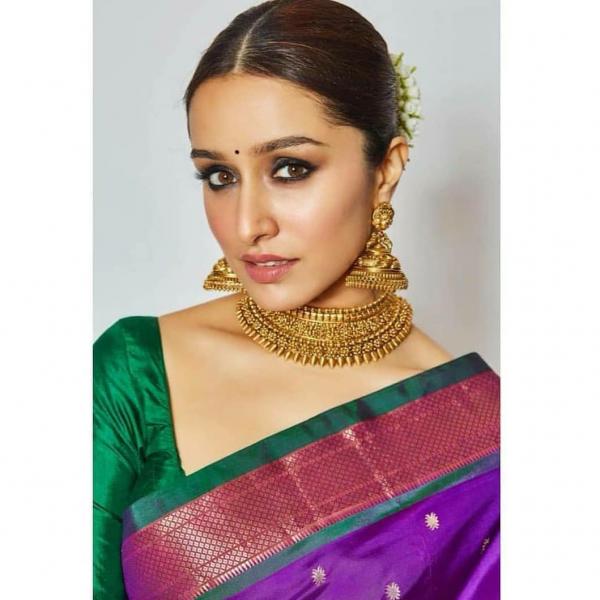
2. Ekdhoti weave Paithani saree
For the ekdhoti weave Paithani saree, a single shuttle is used for weaving of weft. The color of the warp yarn is different from that of the weft yarn. These sarees have a narali border and simple butti designs such as coins or peas!
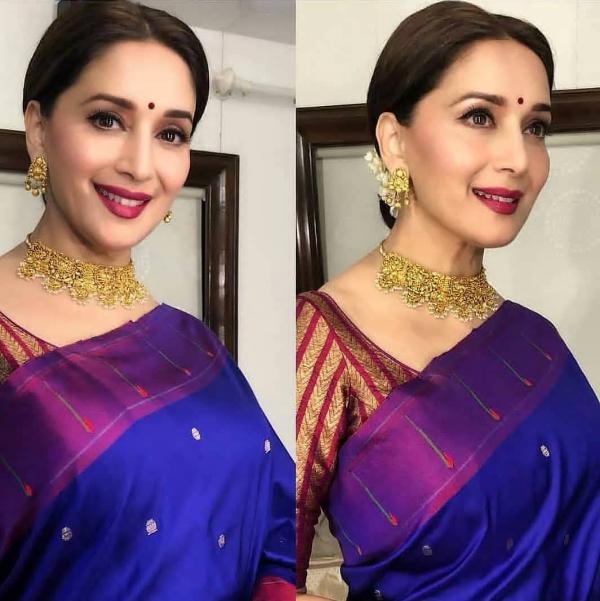
3. Paithani sarees in traditional colours
Paithani sarees look gorgeous in every colour but the three colours that are most common are kali chandrakala (jet black saree with a red border), Raghu (parrot green colour), and Shirodak (pure white).

4. Brocade Paithani
Some Paithani sarees line the border of the sarees with brocade. The more intricate the work of brocade, the more expensive the saree will be!

5. Munia Brocade Paithani
“Munia” means parrot in Marathi. In this kind of saree, parrots are woven on the pallu as well as on the border. These parrots are always in leaf green colour and sometimes also known as “tota-maina”!